
Matabeleland North
Western Zimbabwe / Invest Zimbabwe
Invest Matabeleland North.
Visitor destinations, productive landscapes and industrial services
Matabeleland North brings together the visitor destinations of Victoria Falls and Hwange, the industrial economy around Hwange town, and communities stretching towards the Zambezi and Lake Kariba. Lupane provides the provincial administrative centre, while Binga and Chizarira add different landscapes to the regional story. The province’s investment themes reach across hospitality, engineering, transport, food supply and forest products, with room to explore the services that connect established activities with local enterprises.
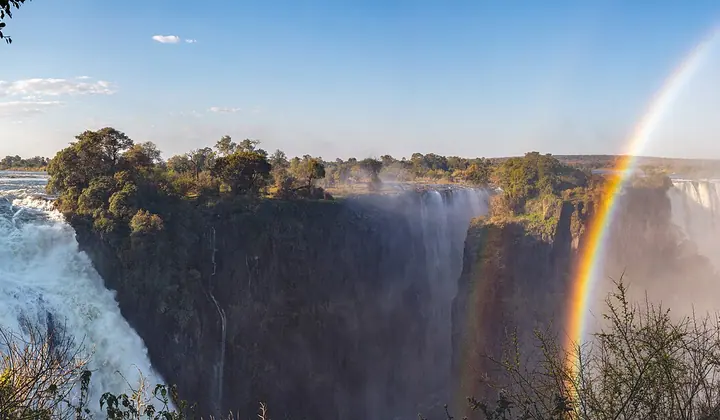
An introduction to Matabeleland North
A place to understand.
Potential to develop.
The Bulawayo–Victoria Falls road provides a useful orientation through the province, with access routes to Hwange National Park. Victoria Falls International Airport connects arriving visitors with the region, while the Zambezi waterfalls form a shared World Heritage property with Zambia. The landscape broadens towards Binga and the escarpment around Chizarira, creating distinct settings for travel, local enterprise and services supporting more remote destinations.
Tourism, energy and resource-based activity give Matabeleland North several economic stories. Alongside destination businesses are the enterprises that keep them supplied and operating: maintenance teams, food producers, transport providers and workshops. These connections suggest practical project ideas. A business can build its proposition around a specific operational need, then draw on local skills, productive resources and relationships to deliver a service with a clear role in the value chain.
Economic strengths
What the province
can build upon.
Established strengths and areas for enterprise development. These themes describe the provincial economy; they are not individual investment offers.
Tourism supply and distinctive experiences
Victoria Falls’ visitor economy and Hwange’s wildlife landscape create different settings for hospitality services, guiding, food provision and locally designed experiences. Businesses could deepen the visitor journey through better coordination, distinctive interpretation or services that make an itinerary easier to organise. Community relationships and conservation knowledge can be central to what makes an experience valuable.[4][5][6]
Engineering around energy and mining
Hwange’s coal-fired power infrastructure and the province’s mineral economy give engineering services a clear regional context. Maintenance, fabrication, safety support and specialist logistics are areas to explore around the needs of industrial operators. A focused supplier can develop a proposition around particular equipment, a recurring technical task or a dependable service response.[7][2]
Forest products with traceable inputs
The provincial office identifies teak among the region’s resources. Furniture, joinery and carefully finished wood products suggest ways to add value through design and workmanship. Traceable sourcing, efficient use of material and consistent finishing can form the basis of a distinctive business proposition, connecting a regional resource with practical products for defined markets.[2]
Food supply and rural production services
Agricultural production and the visitor economy suggest useful connections between producers and buyers. Aggregation, storage, irrigation servicing and deliveries to hospitality kitchens are possible areas for enterprise development. Producer groups and service businesses could organise around the quality, timing and consistency that customers need, giving a local supply chain a clearer commercial shape.[2]
Transfers and access services
An international airport and dispersed destinations create several kinds of transport service to explore. Transfers, vehicle maintenance and coordinated itineraries can help connect an arrival point with a wider journey. A service may focus on a particular destination, a group of accommodation providers or the operational needs of businesses working beyond the main centres.[4][5][8]
Places & connections
The geography
behind the story.
Understand the towns, landscapes and connections that give Matabeleland North its character.
Victoria Falls
Victoria Falls combines a city, an international airport gateway and the Zambezi waterfalls. It is a recognisable starting point for exploring hospitality services, visitor experiences and the local enterprises that support travel in the region.[4][6][3]
Hwange
Hwange has two distinct economic settings: the town’s industrial activities and the national park’s wildlife destinations. Together they give the area a varied commercial character, spanning technical services, logistics, hospitality and nature-based travel.[7][5]
Lupane
Lupane is the provincial capital on the Bulawayo–Victoria Falls road. Its administrative and service functions make it an important geographic anchor for businesses working with communities and customers across surrounding districts.[1]
Binga and Chizarira
Binga connects the provincial story with Lake Kariba, while Chizarira brings the Zambezi escarpment into view. Their landscapes offer a different rhythm of travel and a setting for locally rooted visitor services and enterprise.[8][1]
From place to proposition
The questions
worth resolving.
These are practical starting points for project preparation. The scope depends on the specific site and proposed activity.
How preparation works ↗- Assess land or concession rights, conservation sensitivity and community participation before promoting a tourism site. A scenic location is not evidence of permission to develop.
- Water and grazing pressure can create human–wildlife conflict; the parks authority identifies Binga and Hwange among affected districts. Design site access and operating safeguards accordingly.
- Confirm seasonal road access, fuel, communications and maintenance support. A remote operation needs realistic delivery costs and a workable emergency response plan.
- Test tourism occupancy and industrial offtake independently. Resource presence, airport facilities and public development ambitions do not establish bankability or an available transaction.
Invest in Matabeleland North
Know the place.
Examine the proposition.
Investment listings are kept separate from this provincial guide. Each needs an identified holder, permission to present it, a clear investment ask and supporting evidence.
Sources & further reading Research reviewed 10 October 2026
Provincial profiles combine source-backed context with Invest Zimbabwe’s analysis of possible value chains. Check current conditions with the relevant authority and project holder before making a project decision.
- Matabeleland North provincial office — background ↗Office of the Minister of State for Provincial Affairs and Devolution, Matabeleland North
- Provincial services and resource endowments ↗Office of the Minister of State for Provincial Affairs and Devolution, Matabeleland North
- Matabeleland North Province ↗Zimbabwe Republic Police
- Victoria Falls International Airport ↗Airports Company of Zimbabwe
- Hwange National Park ↗Zimbabwe Parks and Wildlife Management Authority
- Mosi-oa-Tunya / Victoria Falls ↗UNESCO World Heritage Centre
- Hwange Power Station ↗Zimbabwe Power Company
- Chizarira National Park ↗Zimbabwe Parks and Wildlife Management Authority
- Climate Induced Pressure Drives Rise in Human–Wildlife Conflict, 9 January 2026 ↗Zimbabwe Parks and Wildlife Management Authority